Player Notes
Track opponent tendencies and exploit their patterns. Never forget a read again.
Key Benefits
Build a searchable database of opponent tendencies
- Capture reads before they fade — Write notes in real-time or right after sessions while observations are fresh
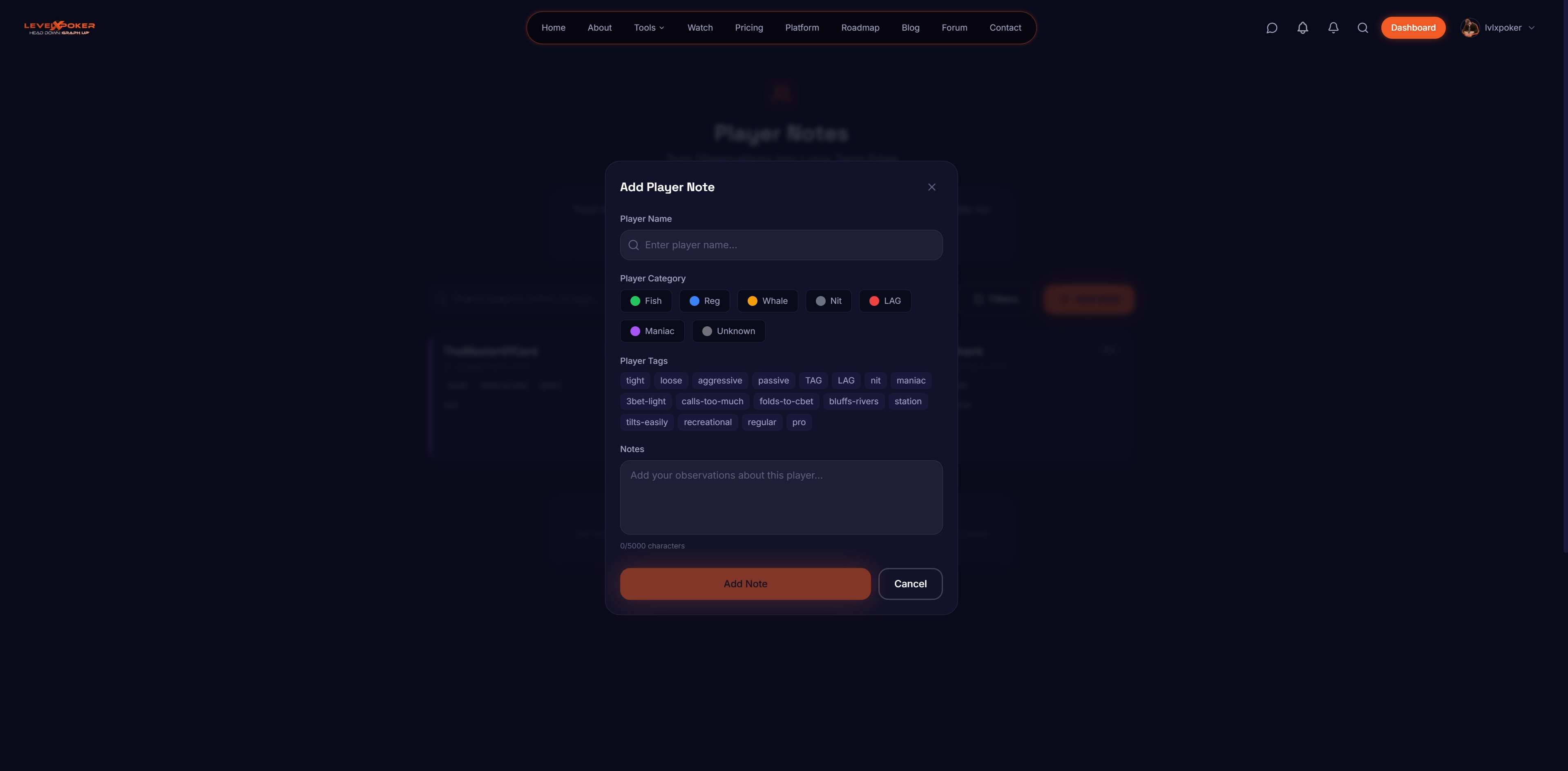
- Tag player archetypes — Categorize opponents (nit, LAG, calling station) for quick pattern recognition
- Search your history — Instantly find notes on any player you've encountered before
- Build an exploit database — Over time, your notes become a personal playbook of adjustments that work
- Compound edge over sessions — Every note makes your next session against that player more profitable
How to Use It
Four steps to building your player database
Spot a Tendency
Notice something exploitable during play
Write It Down
Quick note with the situation and observation
Tag & Categorize
Add relevant tags for easy filtering later
Apply Next Session
Review notes when you see that player again
Real-World Examples
The difference between a good note and a bad note is specificity and actionability.
Bad Note
"Fish. Plays bad."
Good Note
"Calls 3x opens too wide, folds to c-bet on dry boards. Over-defends vs river probes. [2024-01] Now adjusting - starting to float more."
Fits Into a Bigger Workflow
Player notes become more powerful when connected to your other poker systems.
- Hand history context: Link notes to specific hands where you observed the tendency.
- Session tracking: Note which regulars appeared in profitable vs. losing sessions.
- Equity decisions: Your notes inform whether to take thin spots against specific opponents.
- Study focus: Review notes to identify which player types give you the most trouble.
Player Notes FAQ
Detailed enough to be useful, short enough to write. The best notes are specific and actionable: "3-bet/folds to 4-bet" beats "plays tight." Include the situation, what they did, and what it means for future decisions.
Yes. Notes can be tagged, searched, and filtered by player, date, or situation type. As you accumulate observations over multiple sessions, patterns become visible that you'd never remember otherwise.
No - they complement them. HUD stats show you aggregate tendencies over large samples. Notes capture the nuance that stats miss: timing tells, chat patterns, how they respond to specific lines. Use both.
Stop relying on memory
Every observation you capture compounds into long-term edge.
Free to use. No credit card required.
How the Pieces Connect
Each part of the system reinforces the others.
Use a tool page to get the math right
Save or copy the output into your study workflow
Track outcomes over time with session and bankroll logging
Learn faster by turning real hands into structured learning moments
Keep your community and feedback loop in one place
Use a tool page to get the math right
Save or copy the output into your study workflow
Track outcomes over time with session and bankroll logging
Learn faster by turning real hands into structured learning moments
Keep your community and feedback loop in one place
The Note-Taking Routine
A simple process for building your player database session by session.
Review existing notes pre-session
Check notes on regulars you expect to see.
Flag hands during play
Mark moments where you noticed something exploitable.
Write 2-3 notes post-session
Capture the most actionable observations while fresh.
Update existing notes
Add new info or mark when a player has evolved.
Review patterns monthly
Look for themes across your notes to sharpen reads.
Why Keep Notes in One Place?
Most players have notes scattered across platforms, spreadsheets, and memory. That fragmentation costs you edge.
Instant Access
Search any player across your entire history in seconds.
Connected Data
Notes link to hands, sessions, and other tools naturally.
Pattern Recognition
Over time, you see which player types you beat and which beat you.
Common Concerns
Building Better Notes
Start with the basics: how often they VPIP, their 3-bet frequency, and any obvious sizing tells. As you see more hands, add specifics about how they play draws, their river bluffing tendencies, and how they respond to aggression.
Glance at your notes when you enter a pot with a regular. One sentence of context - "folds to river raises" or "overvalues top pair" - is enough to adjust your strategy mid-hand without slowing down your decision-making.
Absolutely. Recreational players often have the most exploitable tendencies, and they're easier to remember because their play stands out. A quick note after a session captures value that compounds every time you play them.
Community & Feedback
Yes. The community forum welcomes hand analysis that includes your reads on opponents. Getting other perspectives on whether your notes led to the right adjustment is a great way to sharpen your observation skills.
Risk Advisory
Poker involves risk. Tools and education can improve decision quality, but outcomes still vary due to variance. Responsible bankroll management and realistic expectations are part of playing well.