Moving Up Stakes
Know exactly when your bankroll supports the next level, not when your emotions do.
Track sessions, analyze trends, and manage your poker bankroll with precision.
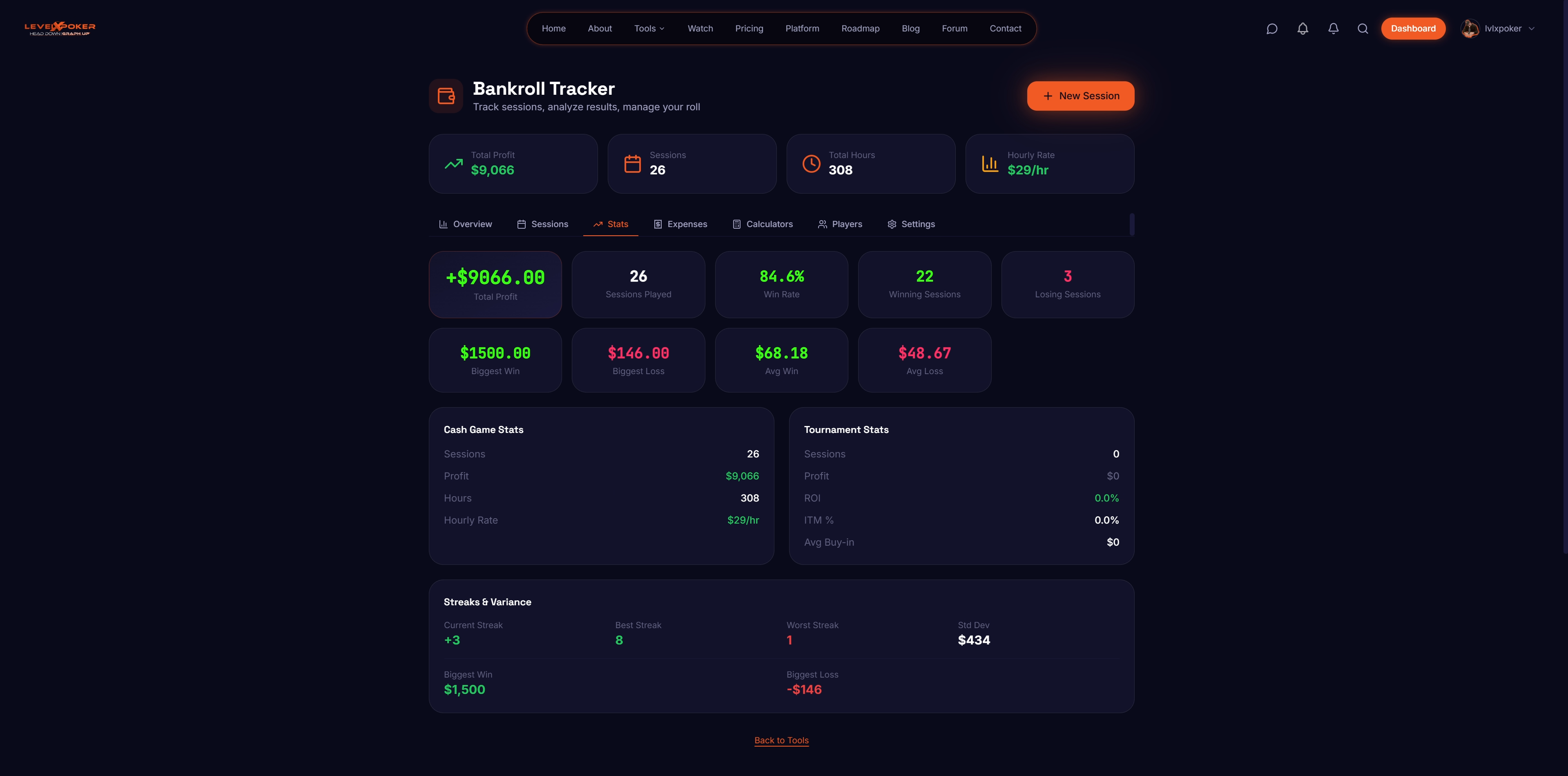
Data-driven decisions for your poker career
Four steps to bankroll mastery
Enter your current bankroll amount
Record each session with stakes, result, hours
Check your graphs and stats weekly
Use data to inform stake and volume decisions
The difference between feeling like you're winning and knowing you're profitable.
You remember your last big session—you were up $800 at 2/5. But you're vaguely aware of some losses you'd rather not think about. You feel good about poker.
Your tracker shows you're up $2,100 over 47 sessions this year, winning at 4.2bb/hr at 1/2. You also see you're -$400 at 2/5 over 6 attempts.
Your bankroll tracker connects naturally with every other part of your poker process.
Yes - maybe even more so. Casual players often lose track of their actual results. A quick session log takes 30 seconds and gives you honest data instead of selective memory. Knowing your true win rate helps you decide if moving up stakes or increasing volume makes sense.
Tournaments are fully supported. Log buy-ins, rebuys, add-ons, and cashes. See your ROI, ITM percentage, and average finish. The tracker handles mixed formats so you can see your total poker picture.
Only if you confuse it with budgeting. Bankroll management is about staying in the game long enough to realize your edge. It's risk management, not bean counting. The players who last decades treat their bankroll as a strategic asset.
Discipline beats talent over the long run. This tool helps you stay disciplined.
Free to use. No credit card required.
Each part of the system reinforces the others.
Use a tool page to get the math right
Save or copy the output into your study workflow
Track outcomes over time with session and bankroll logging
Learn faster by turning real hands into structured learning moments
Keep your community and feedback loop in one place
Use a tool page to get the math right
Save or copy the output into your study workflow
Track outcomes over time with session and bankroll logging
Learn faster by turning real hands into structured learning moments
Keep your community and feedback loop in one place
A simple weekly practice for staying honest about your numbers.
Don't let sessions pile up - memory fades and details get lost.
Check your graph and recent results once per week.
Filter by stake, format, and time to spot patterns.
Are you on track for your volume and profit targets?
Use your data to make stake decisions, not emotions.
Know exactly when your bankroll supports the next level, not when your emotions do.
Track shot-taking attempts separately to see if they're profitable or just fun.
Clean session records make tax time straightforward. No scrambling for receipts.
Set concrete targets (hours, hands, profit) and track progress toward them.
Filter results by time, stakes, or format to find where you're leaving money on the table.
See whether your swings are normal for your stakes and volume.
Your bankroll is the money you've set aside specifically for poker - separate from living expenses and other savings. It's not just a number; it's your ability to withstand variance. Proper bankroll sizing lets you play through downswings without going broke or moving down stakes emotionally.
It depends on your format and risk tolerance. General guidelines: 20-30 buy-ins for recreational cash players, 30-50 for serious grinders, 100+ for tournament players due to higher variance. The more aggressive your play style, the more cushion you need.
Track hours played, location/site, game type, stakes, and any notes about conditions. This context turns raw results into insights. You might discover you win more at certain stakes, times, or venues - information that directly improves your edge.
Treat deposits as bankroll additions and withdrawals as reductions. Don't mix your bankroll with money meant for bills. Clear separation lets you see true poker performance without lifestyle factors clouding the data.
Downswings are normal - variance is real. Your tracker helps you see whether a downswing is within expected range or something to worry about. If you're losing at a rate that exceeds normal variance for your sample size, that's a signal to review your game.
The community forum has threads for discussing bankroll management strategies and sharing (anonymized) graph milestones. Getting perspective from others at similar stakes helps calibrate your expectations.
The forum has dedicated sections for bankroll strategy discussions. Post your situation - stakes, goals, current roll - and get feedback from experienced players who've navigated similar positions.
Risk Advisory
Poker involves risk. Tools and education can improve decision quality, but outcomes still vary due to variance. Responsible bankroll management and realistic expectations are part of playing well.