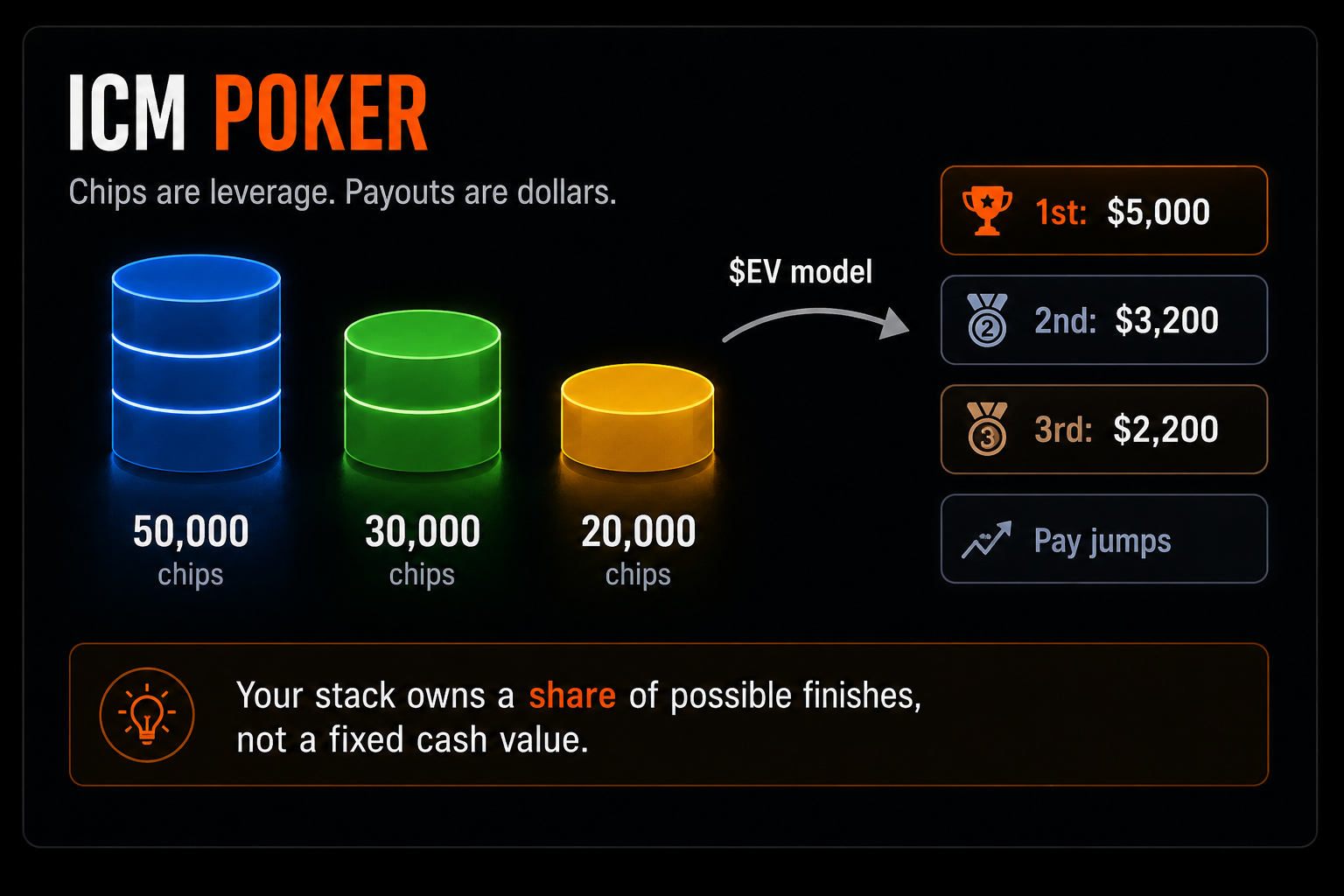
ICM Poker Explained for Tournaments: Why Chips Don't Equal Dollars
Learn how ICM Poker turns tournament chips into real prize equity, why chips don't equal dollars, and how bubbles, pay jumps, and stack sizes should change your decisions.
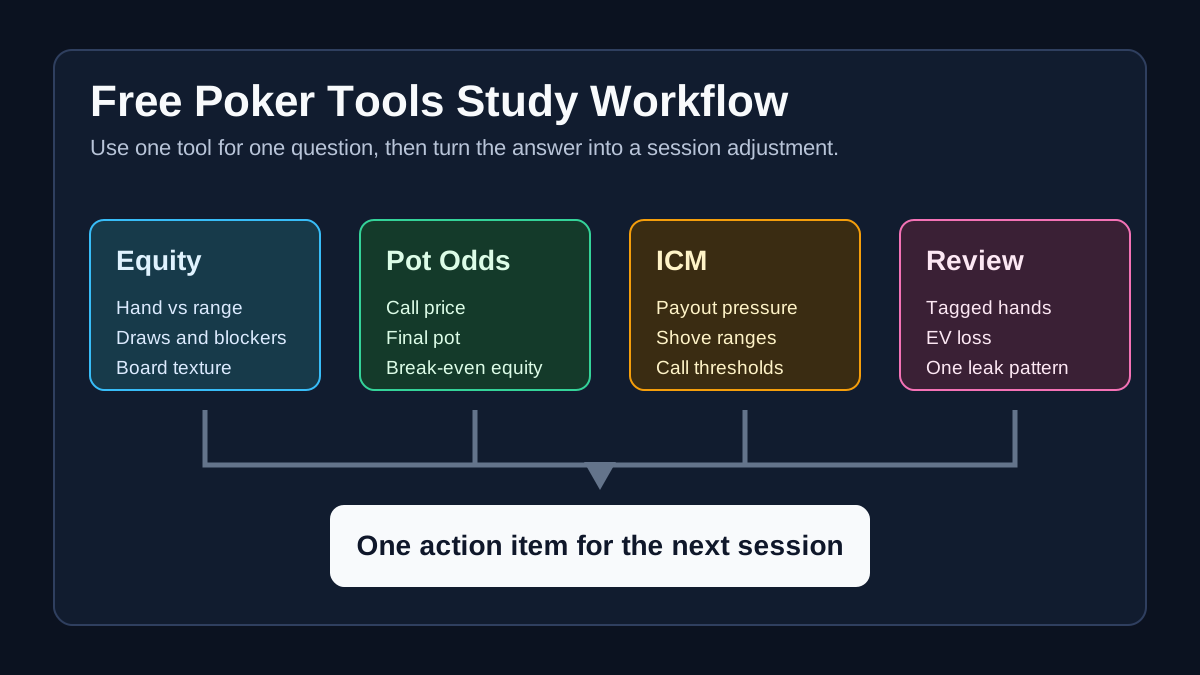
Best Free Poker Tools for Studying: Equity, Pot Odds, ICM, and Hand Review
Build a practical Free Poker Tools study stack for equity, pot odds, ICM, and hand review without wasting money on software before you need it.
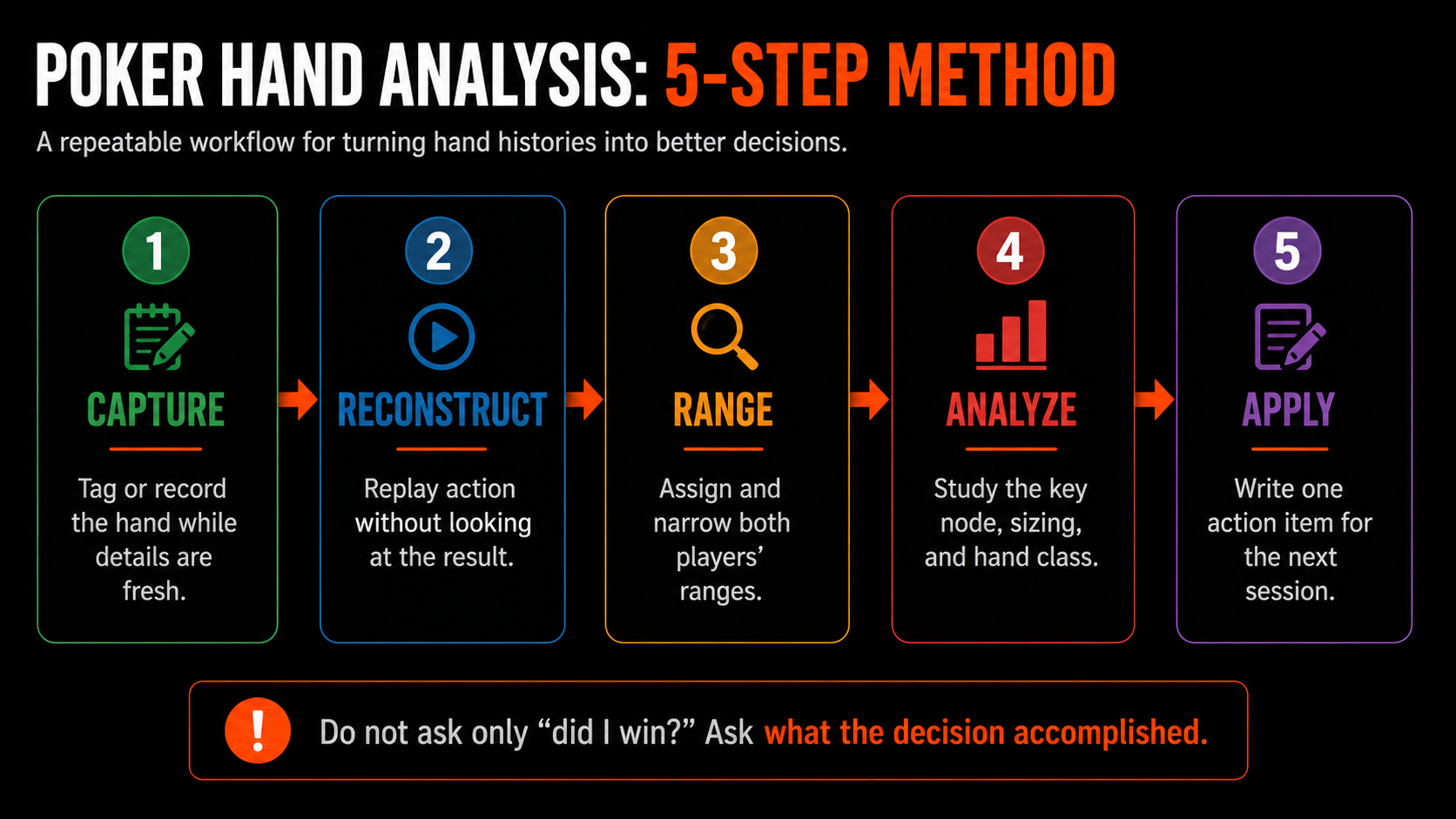
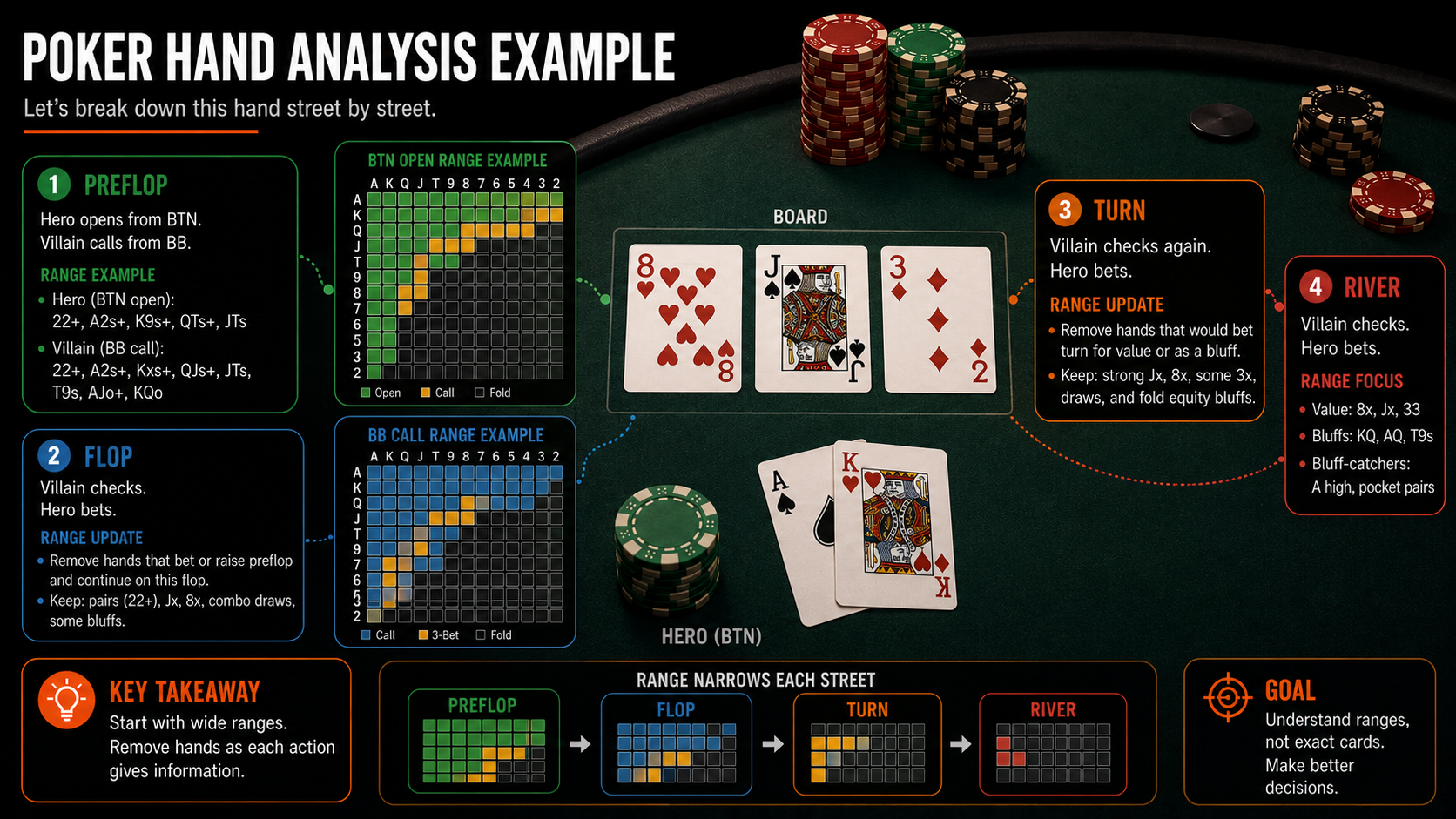
Poker Hand Analysis: How to Review Your Poker Hands Like a Pro
Use this 5-step Poker Hand Analysis method to review hand histories, rebuild ranges, analyze key nodes, and turn each review into an action item.
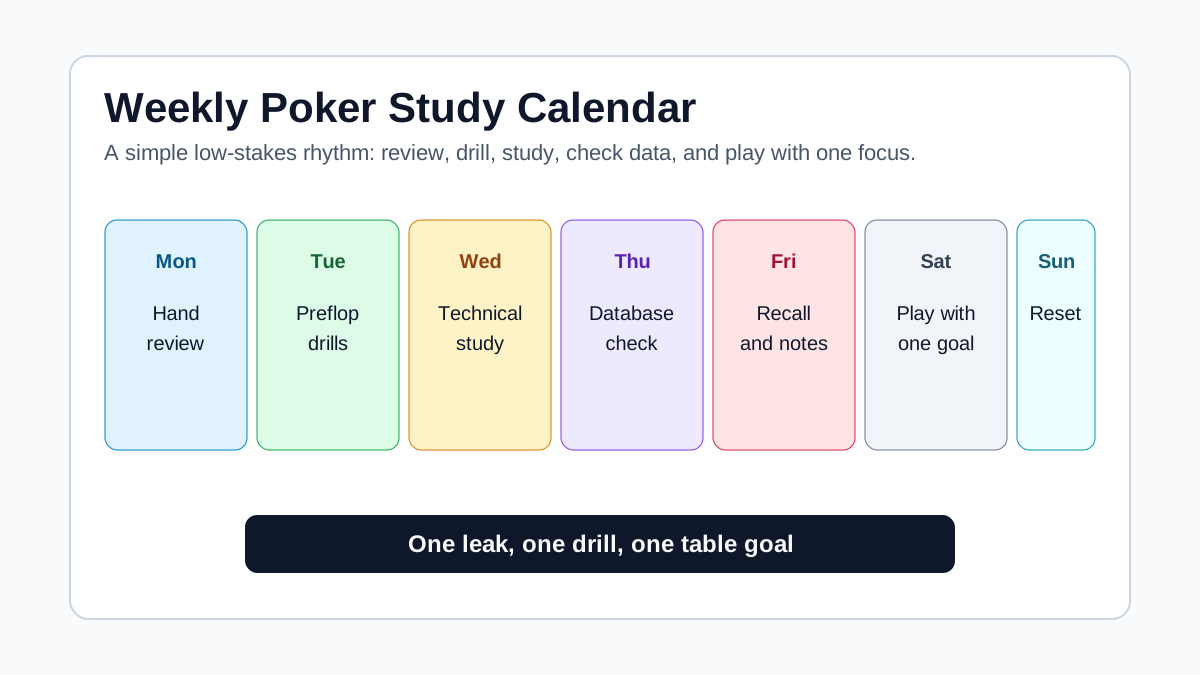
How to Study Poker Without Wasting Time: A Weekly Plan for Low-Stakes Players
Learn How to Study Poker with a practical weekly plan for low-stakes players: hand review, preflop drills, solver-aware study, database checks, and one clear table goal.
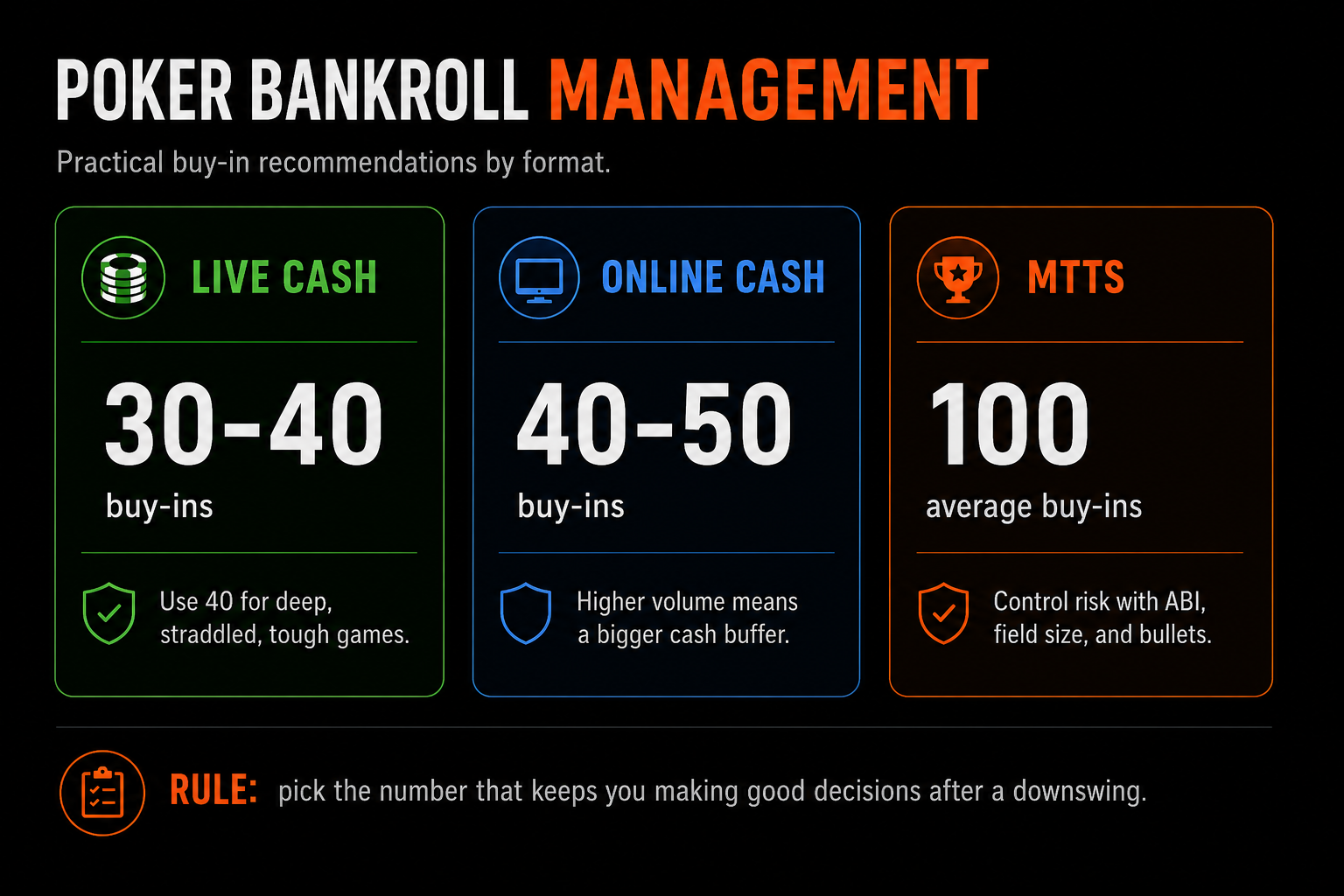
Poker Bankroll Management: How Many Buy-Ins Do You Really Need?
Build a practical Poker Bankroll Management plan with format-specific buy-in recommendations, shot-taking rules, and move-down triggers for cash games and tournaments.
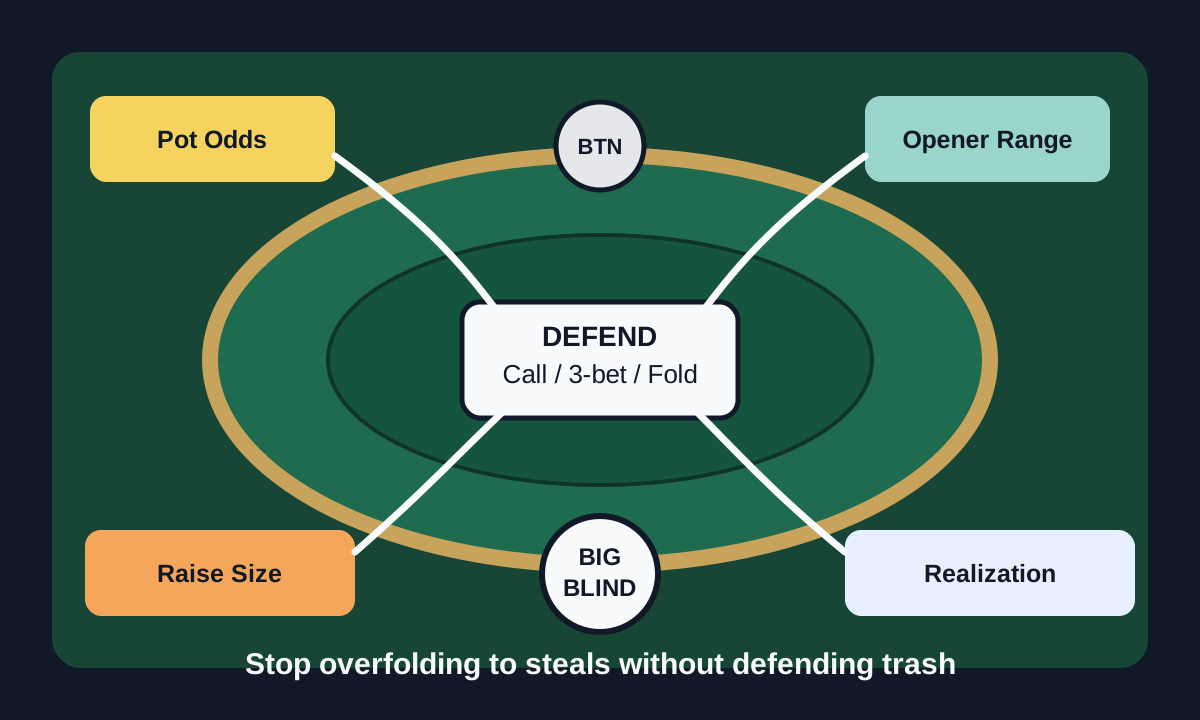
Big Blind Defense Poker Strategy: Stop Overfolding to Steals
Learn Big Blind Defense Poker strategy with practical ranges, pot odds, 3-bet plans, postflop adjustments, and database checks to stop overfolding to steals.
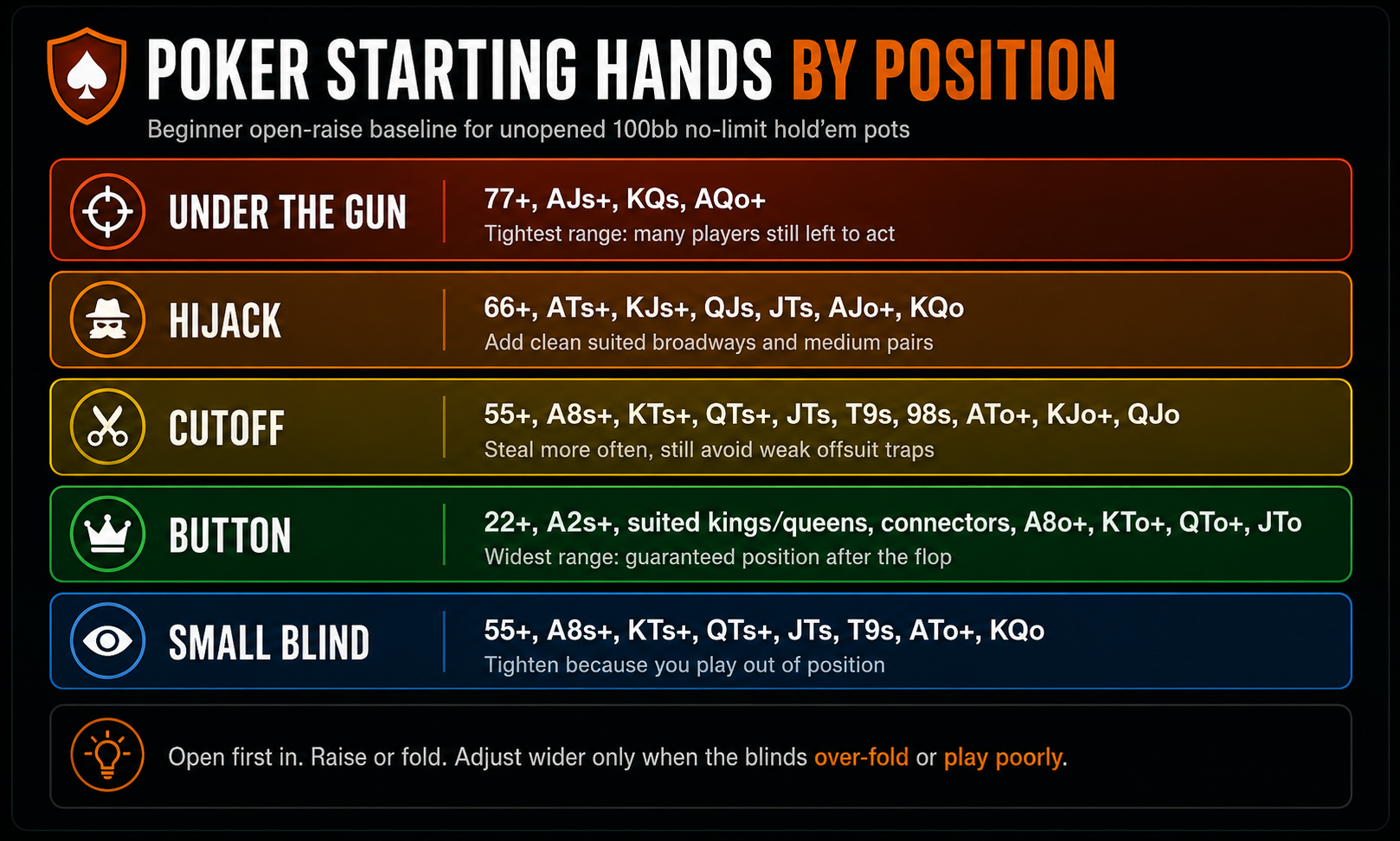
Best Poker Starting Hands by Position: Beginner-Friendly Preflop Chart
Learn the best Poker Starting Hands by position with a beginner-friendly preflop chart, hand-class guide, and practical adjustment rules.
Continuation Bet Poker: C-Betting Explained, When to Bet the Flop, and When to Check Back
Learn when to continuation bet the flop, when to check back, and how range advantage, board texture, position, sizing, and opponent reads shape profitable c-bet decisions.
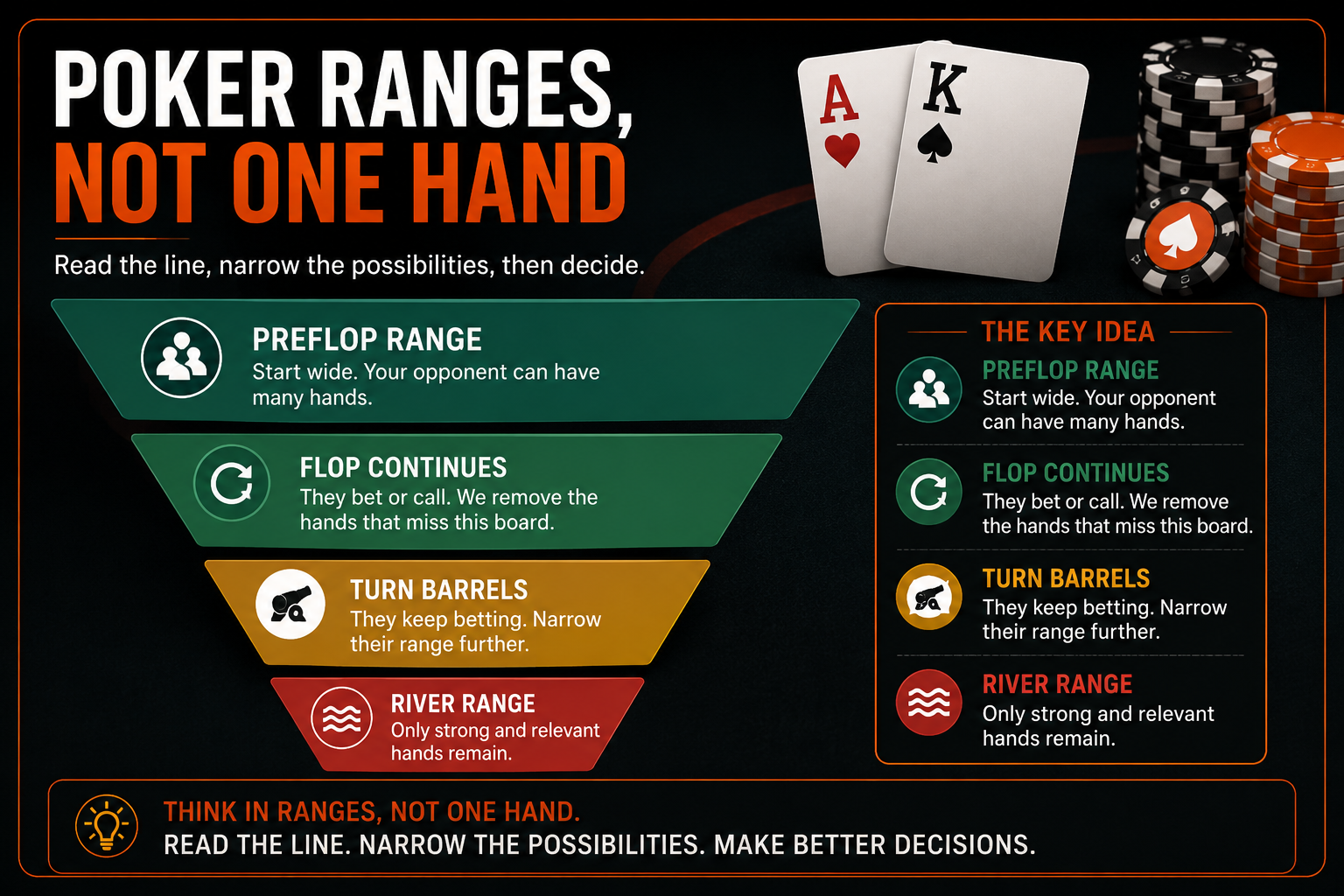
Poker Ranges Explained: Stop Putting People on One Hand
Learn how Poker Ranges improve hand reading, how to narrow opponents street by street, and why guessing one exact hand costs money.
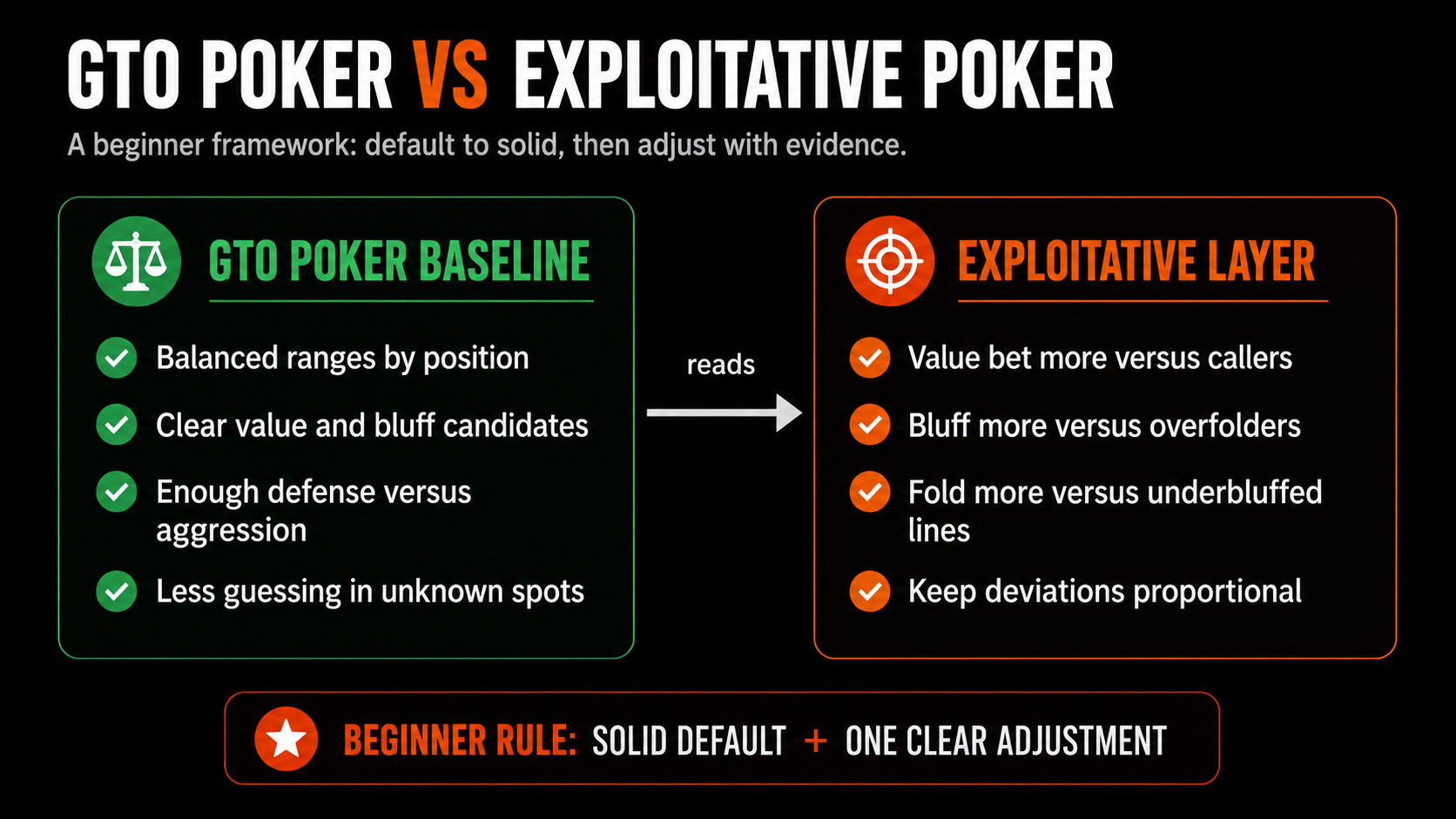
GTO Poker vs Exploitative Poker: Which Strategy Should Beginners Actually Use?
Learn whether beginners should use GTO Poker, exploitative poker, or a practical mix with baseline strategy, simple reads, and low-stakes examples.
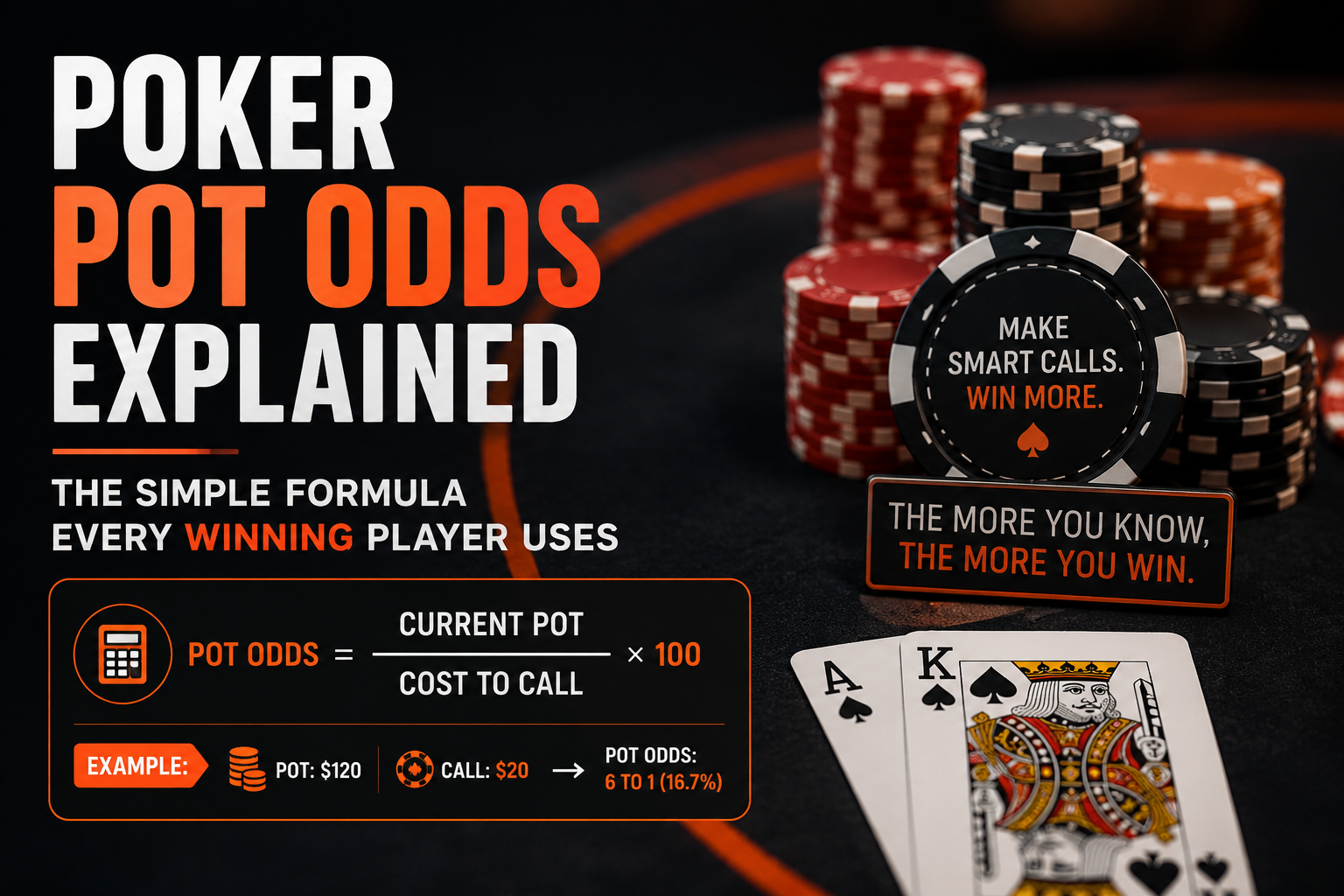
Poker Pot Odds Explained: The Simple Formula Every Winning Player Uses
Learn the simple Poker Pot Odds formula, memorize common bet-size thresholds, and make cleaner calling decisions with draws, bluff-catchers, and implied odds.
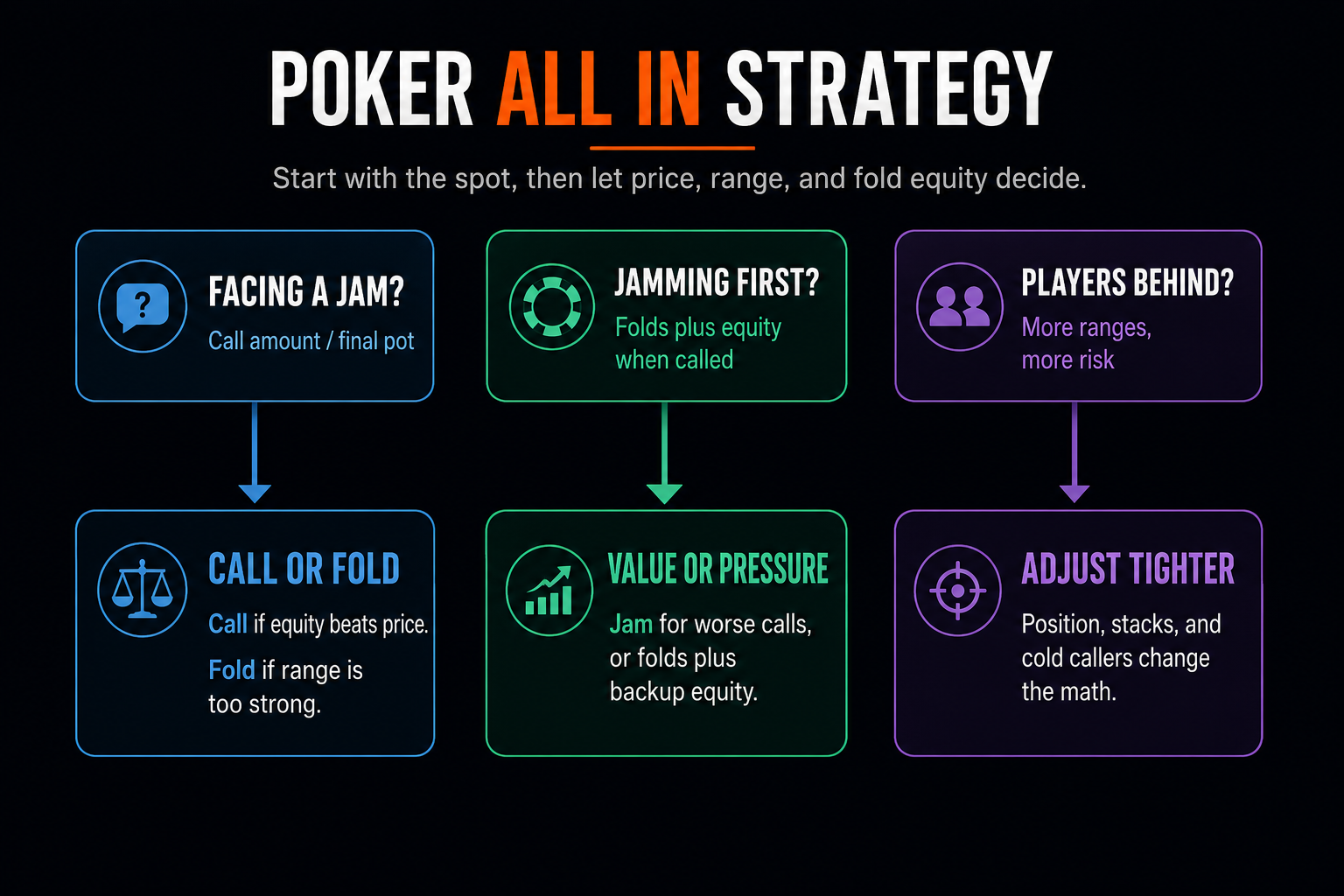
Poker All In Strategy: When to Call, Fold, or Jam
Learn the beginner all-in poker math behind calling, folding, and jamming with pot odds, equity, fold equity, stack depth, and expected value examples.
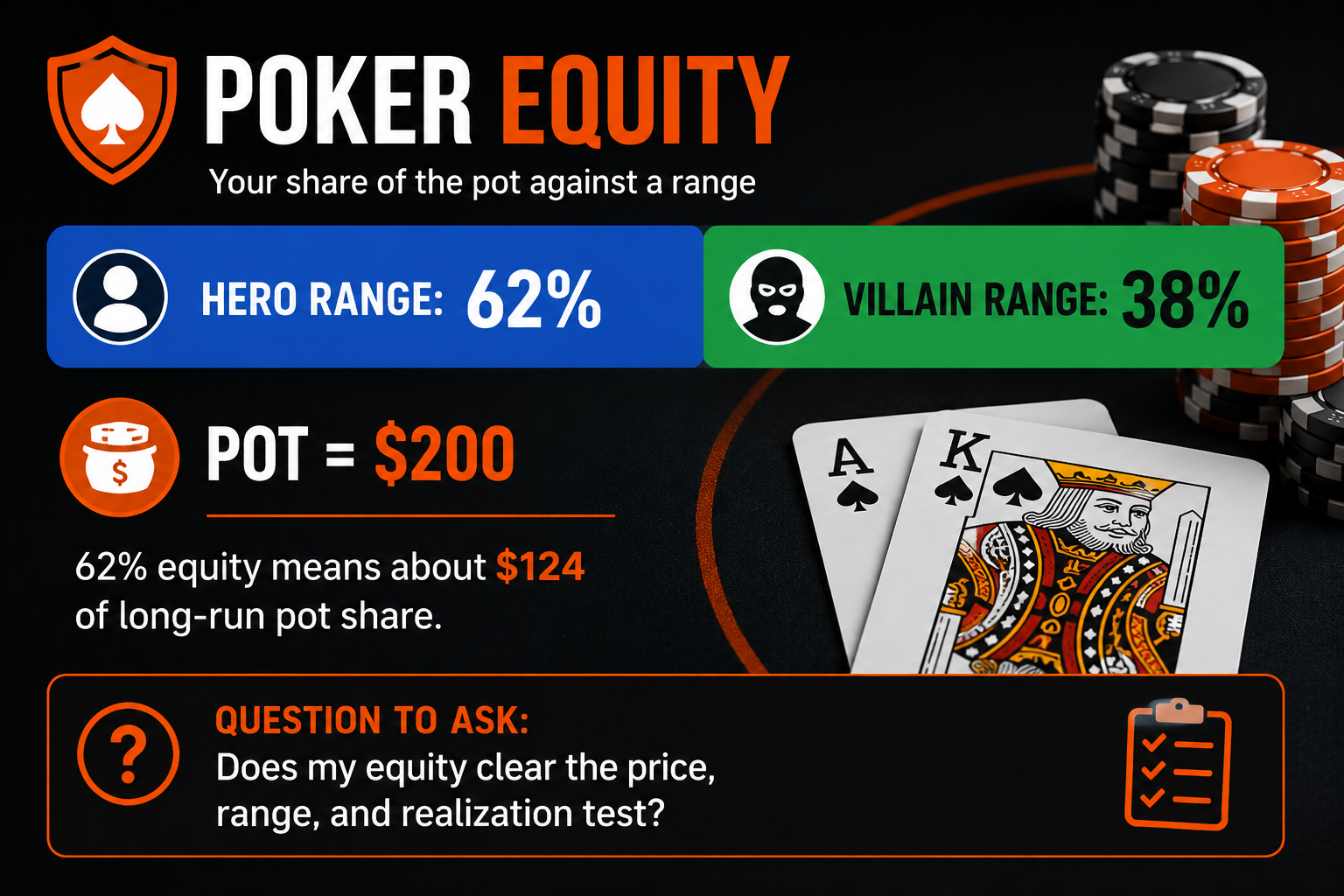
Poker Equity Explained: How to Know When Your Hand Is Actually Ahead
Learn what Poker Equity means, how to compare it to pot odds, and how to decide when your hand is actually ahead against a realistic range.
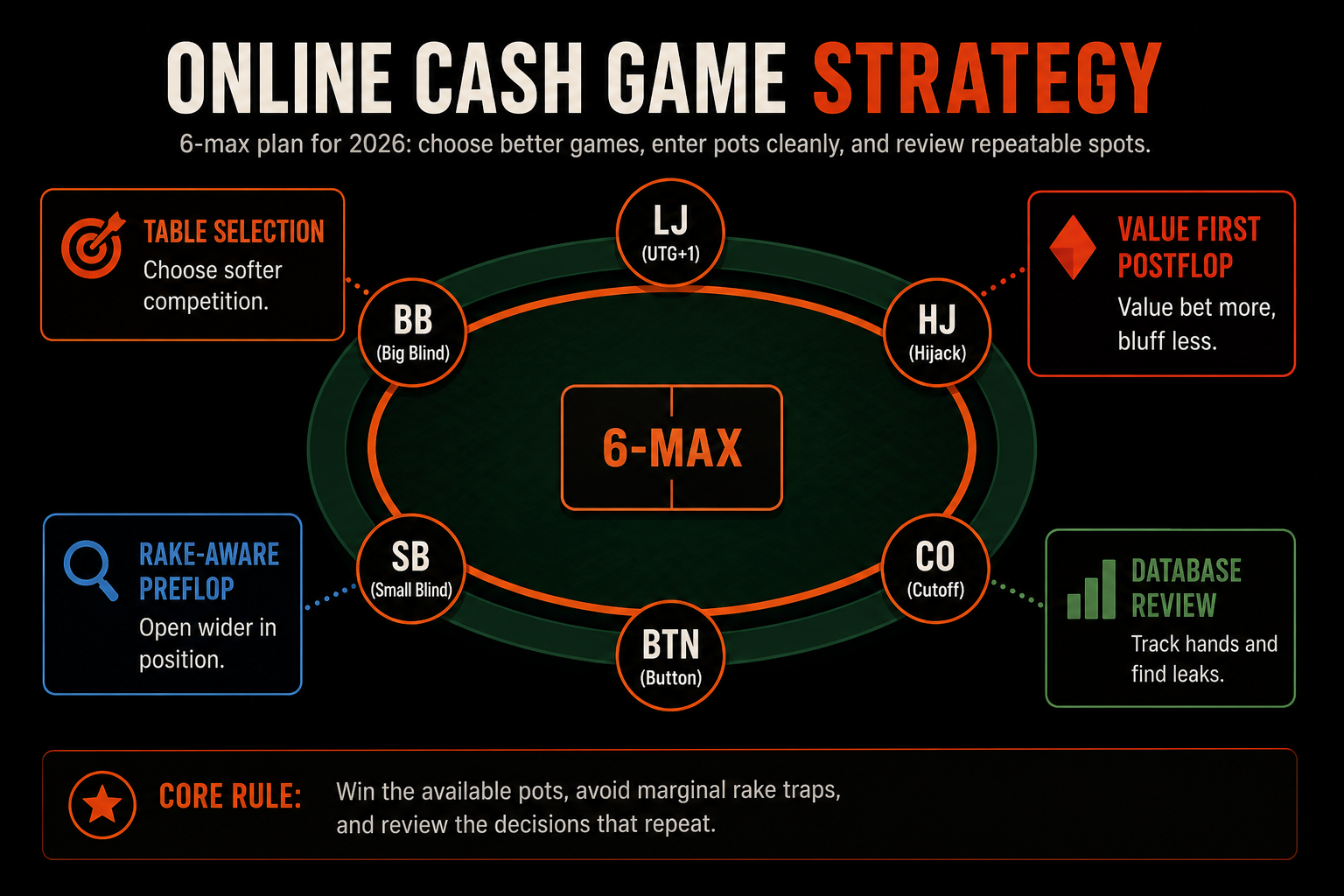
Online Cash Game Strategy: How to Beat 6-Max Games in 2026
A practical Online Cash Game Strategy for 2026: beat 6-max games with table selection, rake-aware preflop ranges, better c-bets, value betting, bluff selection, bankroll control, and database review.
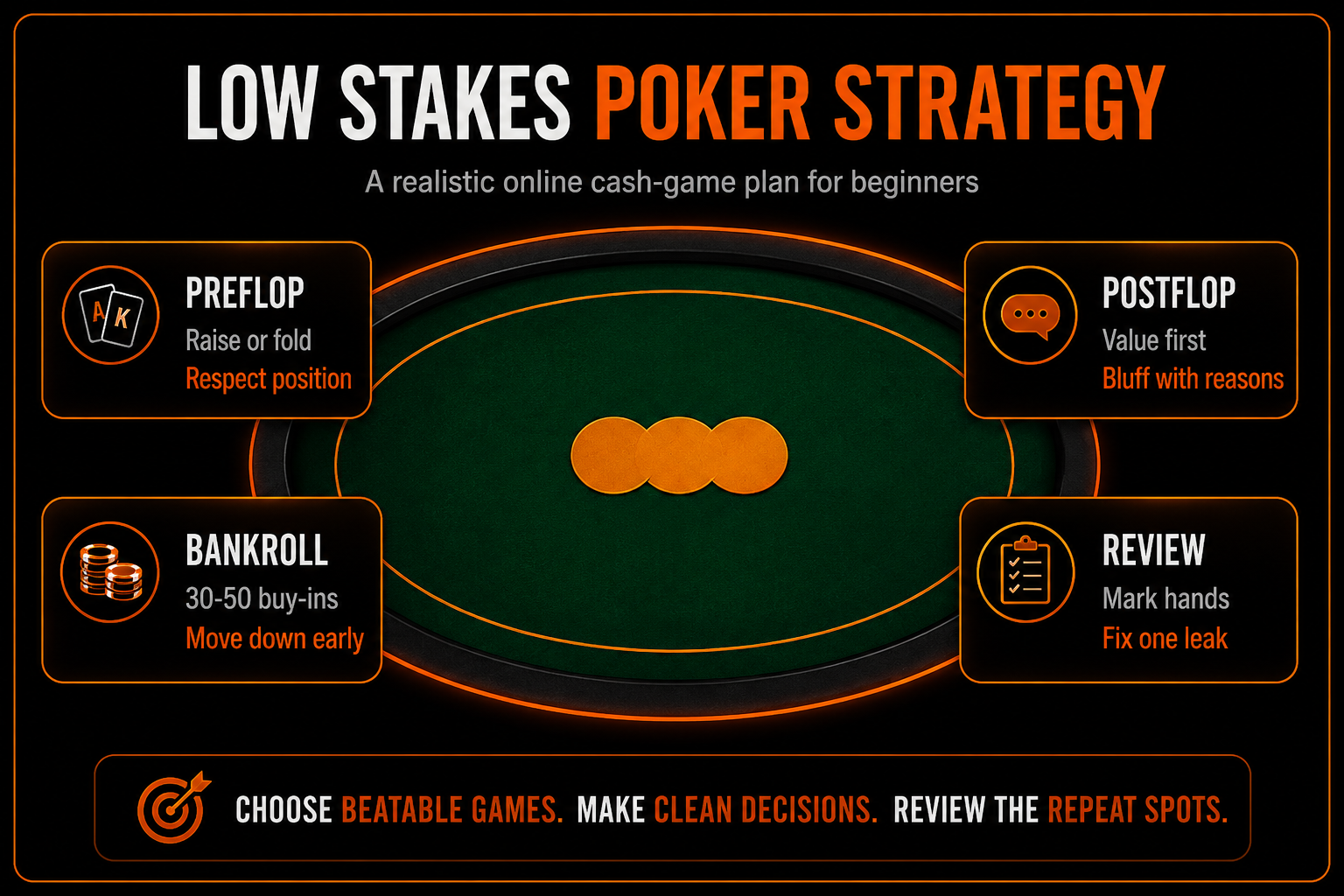
Low Stakes Poker Strategy: How to Win at Online Poker as a Beginner
A realistic Low Stakes Poker Strategy for beginners: choose better online cash games, play disciplined preflop ranges, value bet clearly, manage bankroll, and review leaks.
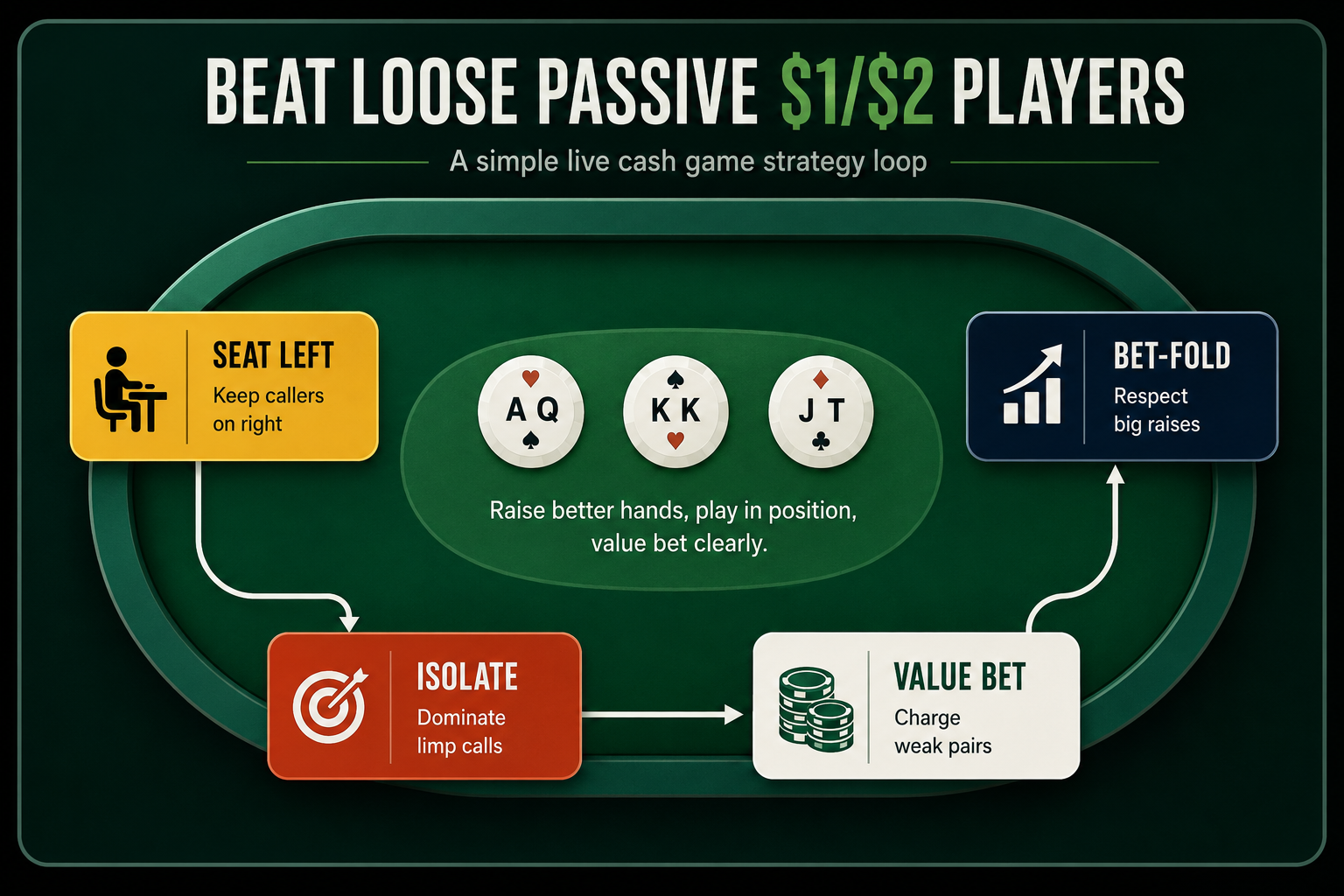
$1/$2 Live Cash Game Strategy: How to Beat Loose Passive Players
A practical $1/$2 Live Cash Game Strategy for beating loose passive players with better seat selection, isolation raises, thin value bets, multiway discipline, and river bet-folds.
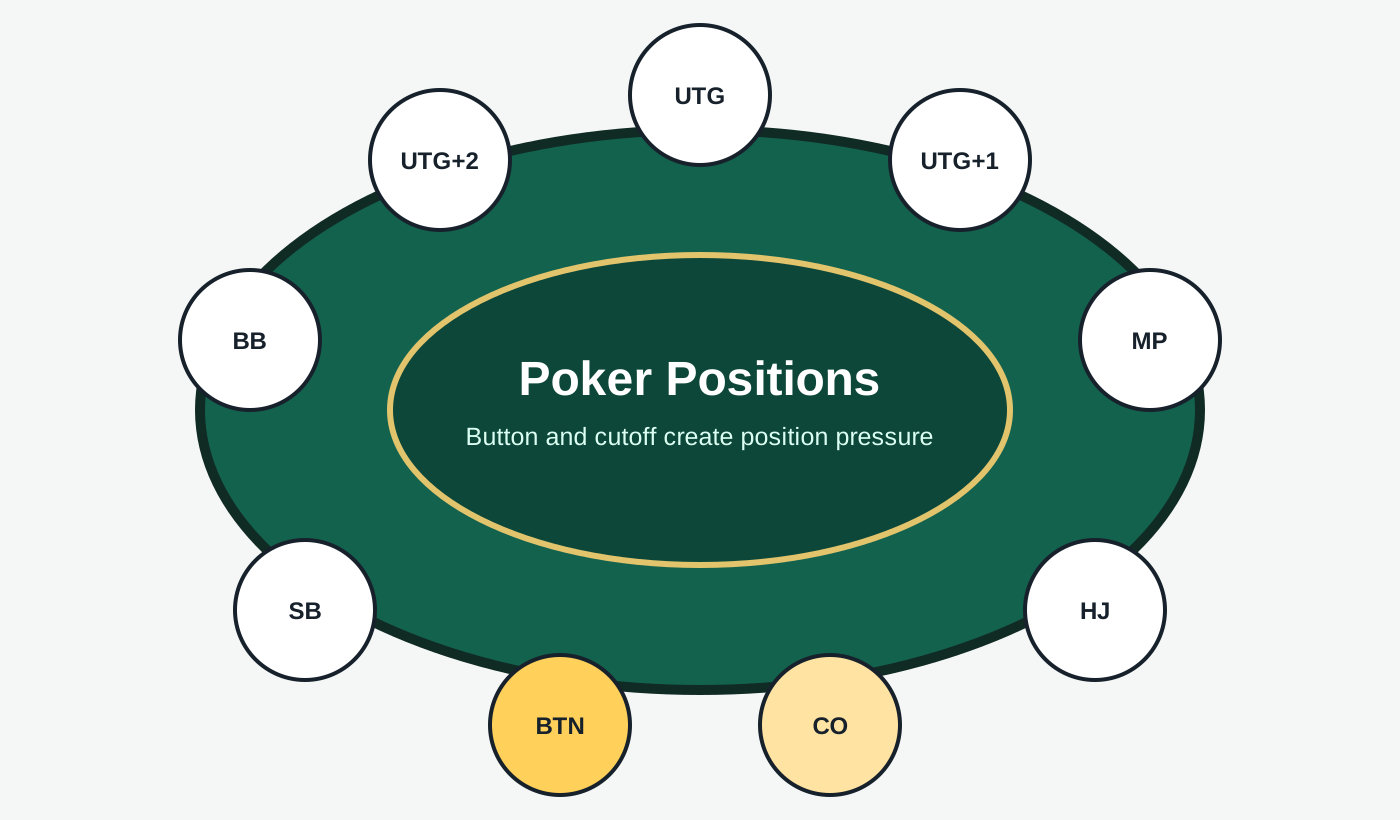
Poker Positions Explained: Why Button, Cutoff, and Blinds Matter So Much
Learn how poker positions change your preflop ranges, postflop information, button steals, cutoff opens, and blind defense decisions.
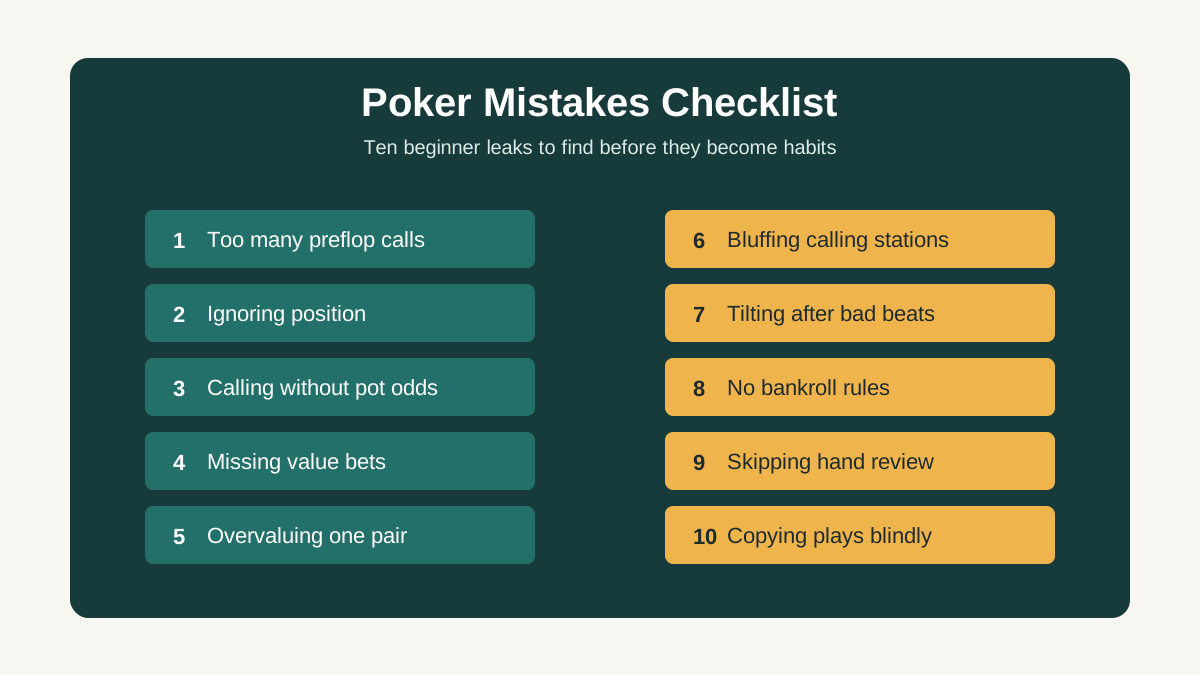
The 10 Most Common Poker Mistakes Beginners Make
Learn the 10 most common Poker Mistakes beginners make, from loose preflop calls and bad position to missed value bets, tilt, and poor hand review.
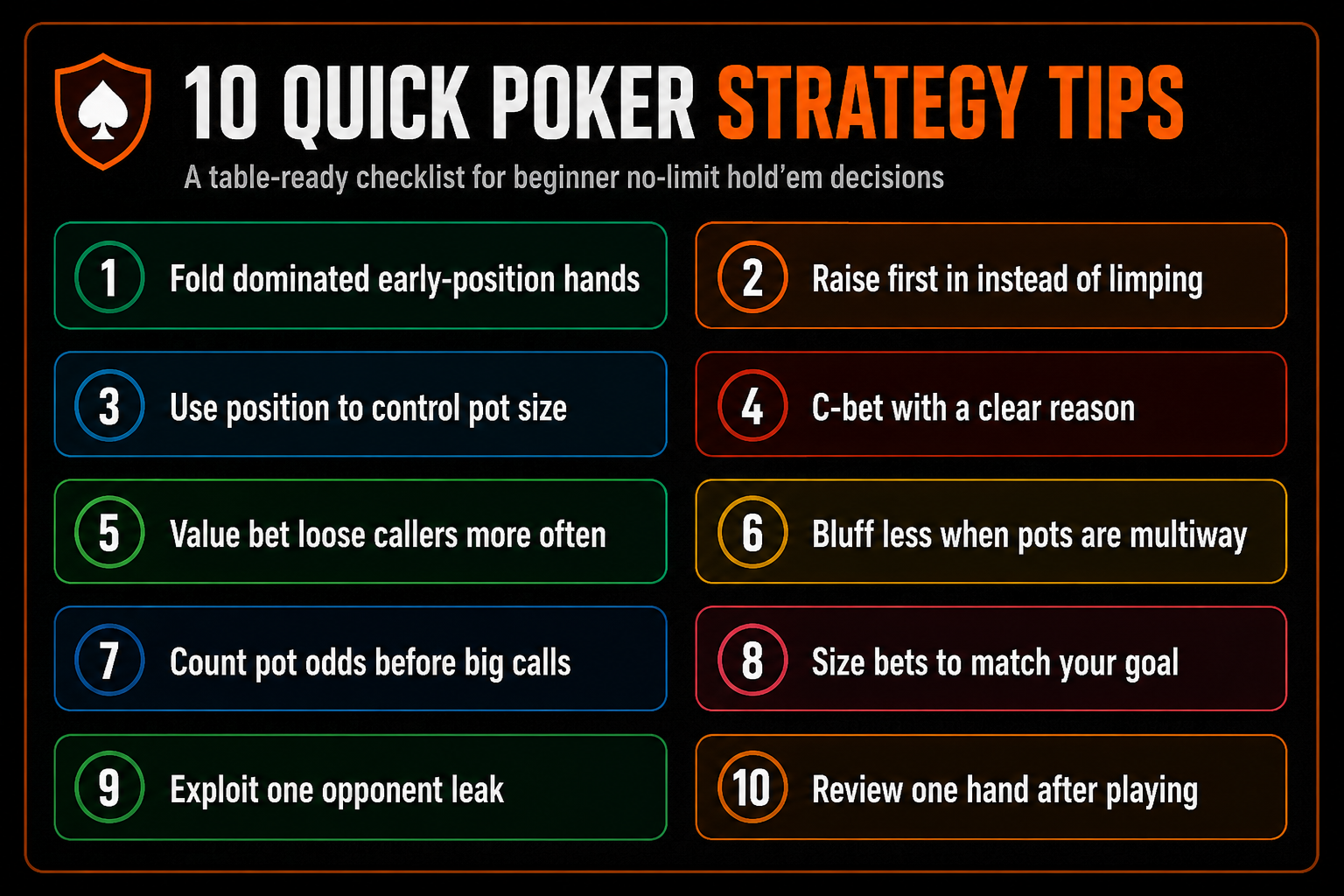
Top 10 Quick Poker Strategy Tips That Will Improve Your Game Today
Use these beginner-friendly Poker Strategy Tips to tighten preflop, value bet better, bluff smarter, and review hands with a practical plan.
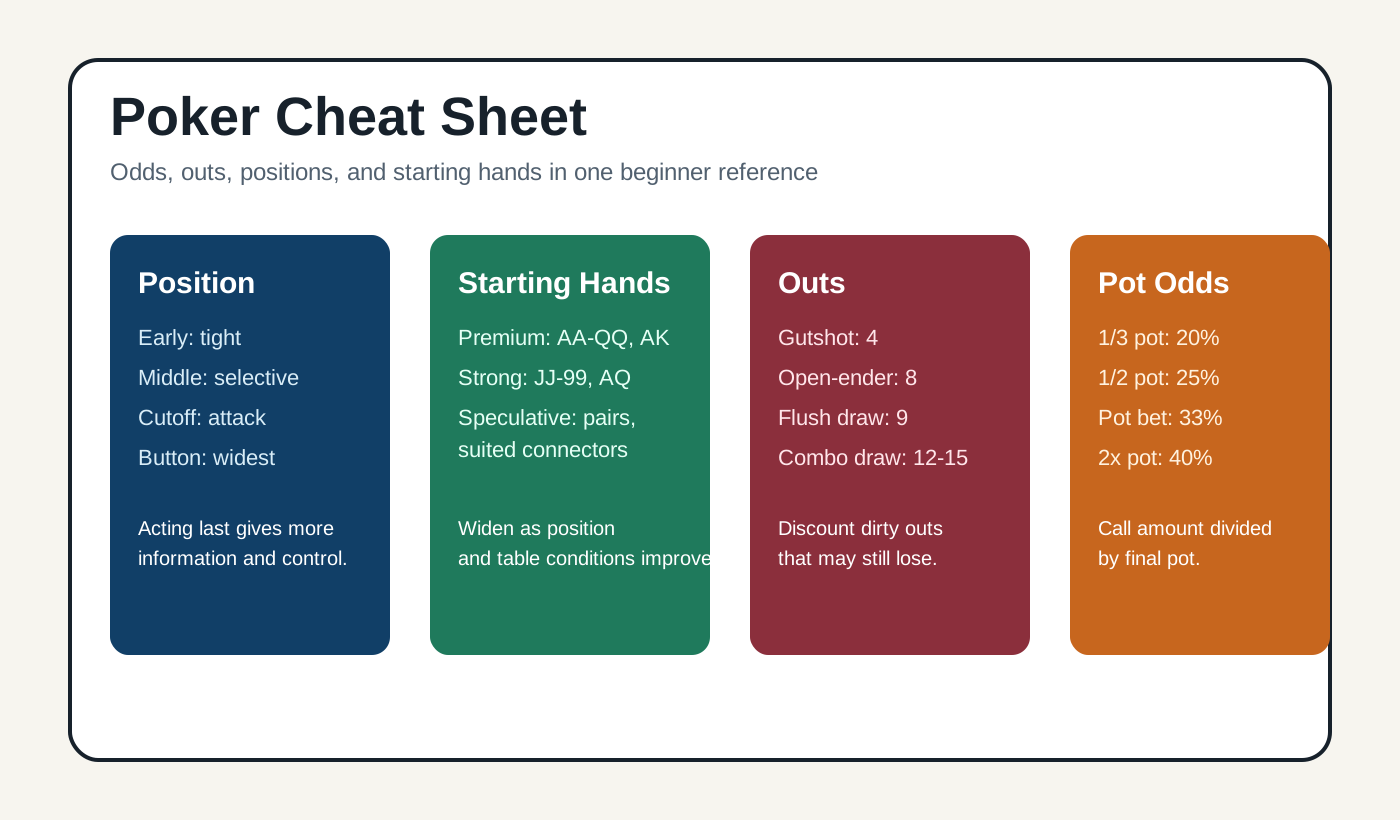
Poker Cheat Sheet: Odds, Outs, Positions, and Starting Hands in One Guide
Use this beginner Poker Cheat Sheet to review hand rankings, positions, starting hands, outs, pot odds, and fast table decisions in one practical guide.